
The Hidden Vulnerability of LED Mask Straps: Elastic Fatigue and Customer Returns
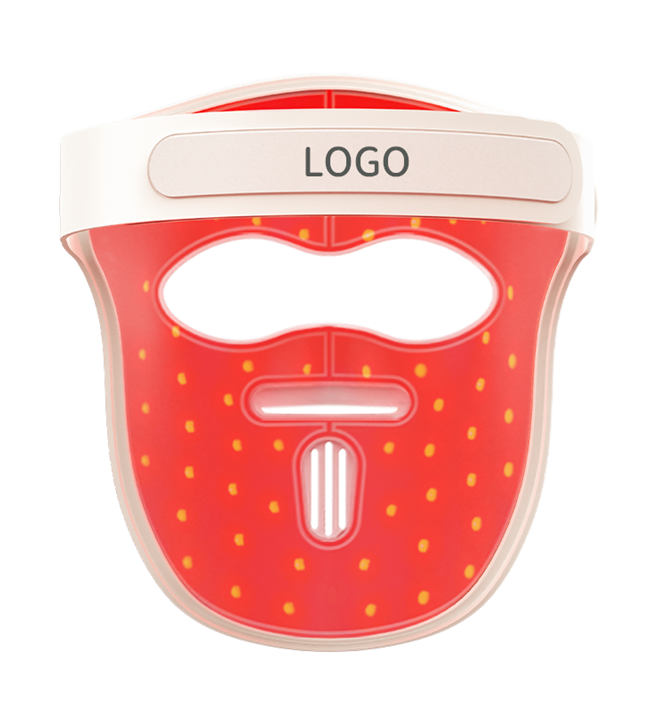
The Overlooked Profit Killer: How Many Returns are Driven by Wearability Rather Than Technical Malfunctions?
What is the single most dreaded return reason for sellers of LED phototherapy masks?
Most would guess: “the lights won’t turn on,” “the battery died,” or “the controller is broken.” However, a deep dive into e-commerce return analytics reveals a silent, massive culprit: “uncomfortable to wear,” “loosens after a few minutes,” “incorrect sizing,” or “constantly slips down.”
All of these returns trace back to a single physical root cause: elastic fatigue of the strap.
An LED mask is not a desktop device; it is a wearable product designed for the face. The strap determines whether the mask can sit securely, evenly, and comfortably on the user’s skin. The moment a strap fails—whether it loosens, snaps, becomes sticky, or deforms—the entire device is effectively rendered useless. No matter how premium the LED chips are, they cannot deliver results if the light is no longer positioned where it belongs.
Yet, an interesting paradox remains: when evaluating LED mask suppliers, 80% of B2B buyers dedicate their focus to checking wavelengths, irradiance levels, and battery capacities. Almost no one asks: “What material is your strap made of? Do you have tensile fatigue test data?”
In this article, we break this down systematically from the perspectives of materials engineering and quality control.
The Physics of Elastic LifesPAN: Why Straps Experience “Fatigue”
First, let’s clarify a misconception: a strap losing its elasticity is rarely just a case of “poor quality.” It is an inherent physical property of elastic mediums—all elastic materials experience fatigue; they simply do so across different timelines and in different manners.
When an elastic material undergoes repeated elongation, it experiences three primary physical changes:
-
Creep: Under continuous tension (e.g., when a user fastens the mask and wears it), the material slowly “yields.” Molecular chains realign under stress, causing the strap to elongate slightly. This explains why a strap might feel perfectly snug at minute 1 and notably looser by minute 30.
-
Stress Relaxation: If a strap is stretched and held at a fixed length (the typical operating state of an LED mask), the internal stress within the material decays over time. Put simply, the strap doesn’t necessarily stretch out further; it simply “gives up” exerting the same structural pressure. This manifests as a noticeable drop in how firmly the mask conforms to the face.
-
Permanent Set: When the strap is removed, it fails to snap back to its original length, leaving behind a “permanent residual elongation.” This is a definitive signal that elastic fatigue has set in—the internal elastic matrix of the material has partially fractured.
The Material Benchmark: A premium medical-grade silicone strap subjected to a continuous 100% elongation test for 72 hours (simulating extended cumulative wear) typically maintains a permanent set of under 5%. For standard rubber bands or low-end elastic webbing, this metric frequently skyrockets to 10%–25%.
This 3x to 5x variance translates directly into the end-user experience: one mask remains perfectly fitted after three months of daily use, while the other begins slipping down the face within four weeks.
3 Strap Failure Modes and Their Direct Path to E-Commerce Returns
From a factory quality engineer’s perspective, strap failure is not a vague concept of “breaking.” It manifests in three distinct modes, each triggering a specific consumer return path.
Mode 1: Loosening (Cumulative Permanent Set)
This is the most insidious failure mode because it happens incrementally. The customer purchases an LED mask and finds the fit ideal for the first two weeks. By week three, they notice it feels loose and tighten the adjustment. By week five, the strap is maxed out but the mask continues to slip. By week seven, the user concludes the device “isn’t working” because uneven contact compromises light delivery. By week eight, a return is initiated.
-
The Procurement Trap: Returns triggered by loosening are rarely logged as “broken strap.” Instead, buyers select “ineffective product” or “saw no results.” The failure remains invisible in your data, masquerading as a performance issue.
Mode 2: Fracturing and Tearing
This is the most immediate failure mode—the strap snaps completely at a point of concentrated stress. Fractures rarely occur in the middle of a solid band; they happen at connection points, buckles, or locations harboring minor manufacturing defects (such as micro-bubbles, impurities, or mold seam lines). These defects are invisible to the naked eye initially, but a cocktail of repeated tension, sweat, cosmetic oils, and ambient UV exposure causes these micro-cracks to propagate until catastrophic failure occurs.
-
The Impact: These returns always include photographic evidence. E-commerce platforms side with the consumer instantly, issuing immediate refunds that directly penalize your store performance rating.
Mode 3: Surface Degradation (Stickiness, Discoloration, Odor)
When low-end elastic compounds interface with skin lipids, perspiration, and cosmetics under varying temperature and humidity cycles, they undergo chemical degradation. The surface becomes tacky or sticky to the touch, translucent materials turn a muddy yellow, and the band begins emitting a distinct chemical odor.
-
The Impact: In the beauty industry, this is fatal. It violates the consumer’s psychological expectation of a hygienic personal care routine. A sticky, yellowed strap erodes trust in the safety and premium nature of the entire electronic device.
Material Breakdown: Silicone, Rubber, and Webbing
The LED mask market relies on three primary strap materials. The distinction lies in their ideal deployment scenarios and operational lifespans.
1. Medical-Grade Silicone
Silicone stands out as the premier choice for elastic recovery. High-quality, platinum-cured medical-grade silicone delivers a tensile fatigue life exceeding 100,000 cycles under a 50% elongation load. This ensures years of twice-daily use without a noticeable permanent set. It is chemically inert, non-porous, and carries ISO 10993 certification for biocompatibility. For premium brands, this is the default choice to eliminate wearability complaints.
2. Textile Webbing (Nylon + Spandex)
Woven straps offer superior skin comfort and breathability. Wrapping spandex within a nylon or polyester sheath feels softer against the skin than solid silicone and prevents sweat accumulation. While its elasticity retention outperforms cheap rubber, it introduces a unique risk: absorption. If left unwashed, sweat and cosmetics embed deep within the fibers, creating a breeding ground for bacteria and odors. Consequently, textile bands should only be utilized in designs featuring fully detachable, machine-washable configurations.
3. Rubber / Elastic Cord
This represents the lowest cost tier. While it offers a firm, snappy initial pull, rubber degrades rapidly when exposed to ambient UV, sebum, and alcohol-based cosmetics. Within 6 months, elasticity retention can drop by 30%–50%. Because this degradation accelerates sharply after the second month, it acts as a ticking clock for e-commerce return windows.
The Financial Calculus: The Micro-Cost of a Macro-Problem
In manufacturing, saving pennies on a component often exposes a business to massive backend operational liabilities. Let’s look at the financial realities:
-
Return Rate Suppression: Wearability issues (comfort, slippage, sizing) typically account for 15% to 25% of total returns in the beauty electronics category. If a premium strap slashes your overall return rate from 8% down to 6% on a volume of 1,000 units per month, you save 20 returns monthly—or 240 units per year.
-
The True Cost of an RMA: A cross-border B2C return involves reverse logistics fees, warehouse inspection labor, repackaging/refurbishment costs, or total item write-offs if the strap cannot be sanitary-restored. Furthermore, high return rates trigger platform-level algorithmic penalties, increasing commission fees or suppressing organic search visibility. Conservatively, a single return incurs an explicit cost of $15 to $40.
-
The Mathematical Reality: The cost delta between an inferior strap and a medical-grade silicone strap ranges between $0.50 and $2.00 per unit. Choosing the cheaper alternative means risking a $15 to $40 operational loss per return, alongside irreversible damage to your product listings’ star ratings.
4 Benchmarks to Verify Strap Quality During Sourcing
When auditing an LED mask supplier, utilize this four-point engineering checklist:
-
Demand Material Datasheets (Not Verbal Assurances): Ask for the exact formulation. “Is the silicone platinum-cured or peroxide-cured? What is its Shore A hardness?” * Platinum-cured silicone is pure, free of volatile byproducts, and completely odorless.
-
Medical compliance requires verified ISO 10993-5 (In Vitro Cytotoxicity) and ISO 10993-10 (Irritation and Skin Sensitization) reports.
-
Ideal hardness should sit in the 30 to 50 Shore A range to balance structural support with facial comfort.
-
-
Request Tensile Fatigue Testing Logs: Ask: “How many elongation cycles have these straps undergone, and what was the recorded permanent set?” Premium silicone must maintain a permanent set of after 10,000 cycles at 50% elongation. A supplier lacking these logs treats the strap as an unmonitored accessory rather than a critical component.
-
Review Accelerated Aging Data: Ensure the component has undergone environmental testing combining UV exposure, thermal-humidity cycling, and artificial sweat immersion. Reliable factories perform these tests during the product validation phase to map long-term structural changes.
-
Evaluate the Serviceability Architecture: Straps are wear-and-tear items. A sustainable product design allows end-users to swap out a strap smoothly without specialized tools. Verify whether the assembly relies on modular buckles, hook-and-loop matrices, or fixed structural adhesives. If a strap is permanently stitched or glued into the housing, a loose strap means a scrapped device.
Engineering Integrity Focus: RainbowDO’s Component Standard
Strap engineering serves as an excellent proxy for a factory’s true operational standards. A supplier that invests in medical-grade raw materials, verifies lifecycle fatigue data, and builds modular, user-serviceable paths is a supplier focused on product longevity over short-term cost reduction.
This rigorous methodology is a core pillar of international medical device manufacturing. At RainbowDO, our facilities maintain ISO 13485 quality management systems alongside MDSAP and FDA 510(k) clearances. Under these regulatory frameworks, every component making direct contact with user skin undergoes rigorous biocompatibility testing and batch-traceable validation.
The entire RainbowDO LED mask portfolio (including the RB-081 and RB-008C/M/S/T/N/J/G series) is engineered exclusively with medical-grade, platinum-cured silicone straps featuring a tool-less, user-replaceable buckle system. Every production lot undergoes automated tensile fatigue cycling and sweat-resistance testing prior to line assembly.
If you are currently auditing suppliers for professional-grade LED phototherapy masks, contact the RainbowDO engineering team today to request material compliance files, tensile testing datasets, and market-tailored configuration strategies.
Contact Channels: layla@rainbowdo.com | WhatsApp: +86 135 9032 9742
FAQ: Frequently Asked Questions
Q1: How long should an LED mask strap last before requiring replacement? Under a standard daily usage profile (one 20-to-30-minute session per day), a medical-grade silicone strap will maintain structural integrity and elastic recovery for 3 to 5 years without significant permanent deformation. Woven textile straps generally require attention or replacement within 1 to 2 years, while low-end rubber bands degrade within 6 to 12 months.
-
Field Diagnostic: Lay the uninstalled strap flat on a level surface. If it exhibits “curl memory” or remains permanently elongated compared to its original specifications, it has reached its elastic limit.
Q2: Which material is superior for highly sensitive skin types: silicone or textile webbing? Medical-grade silicone is inherently superior from a chemical perspective; it is completely inert, non-porous, resists bacterial colonization, and passes strict ISO 10993 dermal protocols. Its limitation is breathability, which can cause minor moisture build-up during extended wear. Textile webbing offers superior airflow and tactile softness but acts as a sponge for sebum, sweat, and topical skincare products. For sensitive skin profiles, textile bands are only safe if the user commits to washing them weekly. If a low-maintenance protocol is preferred, silicone is the safer choice.
Q3: Can a consumer repair a loose or stretched strap independently? This depends entirely on the mechanical interface of the mask. If the device utilizes a modular snap-fit or buckle design, replacement takes less than 30 seconds. If the strap is permanently sewn or ultrasonic-welded into the primary housing, it cannot be repaired cost-effectively, meaning the lifespan of the strap dictates the lifespan of the entire mask. This underscores why sourcing a user-replaceable design is vital for brand longevity.
Q4: How can I quickly evaluate strap quality during a factory inspection without testing equipment? You can perform three rapid diagnostic checks on-site:
-
The Tensile Recovery Check: Firmly stretch the strap to roughly 1.5x its static length, hold for 10 seconds, and release. A high-grade elastomer will snap back to its exact original dimensions instantly. Lagging recovery or visible residual elongation points to weak cross-linking.
-
The Surface Tactile Test: Rub the material firmly between your fingers. Premium silicone features a dry, low-friction, silky finish. If the surface feels tacky, sticky, or creates high friction, it indicates an unstable polymer blend or poor curing.
-
The Translucency Inspection: Hold semi-transparent silicone straps directly up to a strong light source. The internal structure must be completely uniform. The presence of internal micro-bubbles, dark specks, or structural striations indicates manufacturing impurities that act as stress-concentration points where tearing will eventually begin.
This technical guide was compiled by the RainbowDO Engineering Team, leveraging established elastomeric engineering methodologies and hands-on factory validation protocols. For technical consulting or product sourcing inquiries, please contact: layla@rainbowdo.com / WhatsApp: +86 135 9032 9742

