
Why the Silicone on Your LED Mask Turns Yellow
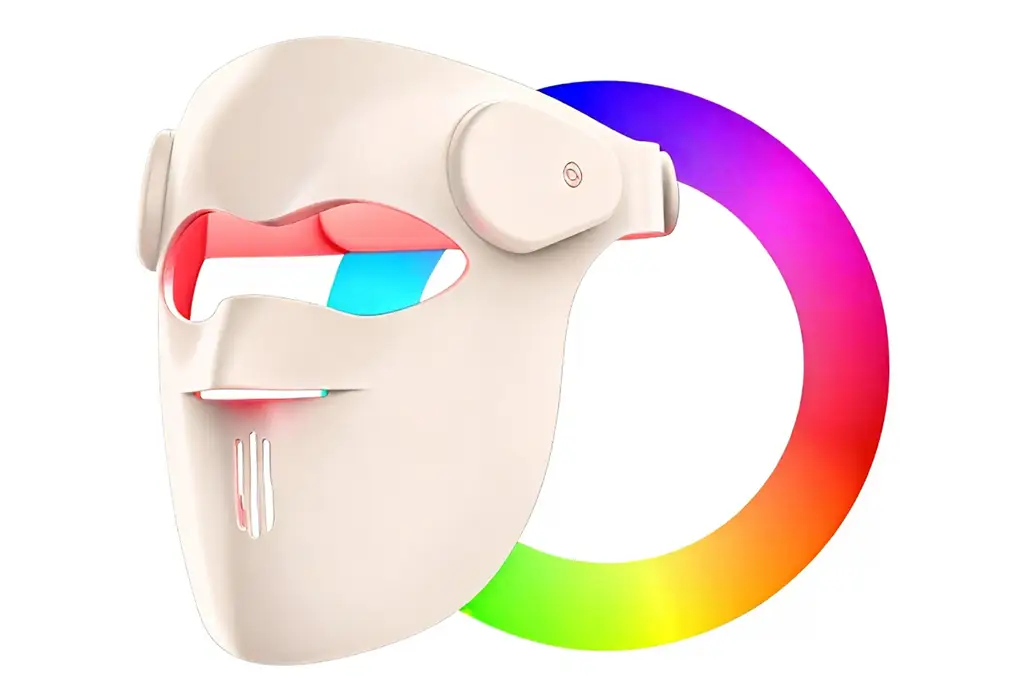
Have you ever wondered why a perfectly “functional” mask suddenly gets abandoned by the user?
After selling an LED phototherapy mask for a while, you will notice a specific category of negative reviews when scrolling through e-commerce feedback:
“I’ve used it for three months, and the silicone is turning yellow. It looks filthy, and I don’t want to put it on my face anymore.”
“At first, I thought I just hadn’t washed it properly, but no matter how hard I scrub, it won’t come off.”
“The lights still work fine, but the mask looks like something picked up from a flea market.”
This is not an isolated issue. Silicone yellowing is a severely underestimated driver of returns in the LED mask category. It rarely triggers a “functional failure” classification in data logs, but it instantly triggers a consumer realization: “This product is not worth the price I paid.”
Yet, during procurement, buyers focus almost exclusively on technical specifications: LED chip parameters, irradiance uniformity, battery capacity, and controller reliability. Virtually no one asks before signing the contract: “Is your silicone platinum-cured or peroxide-cured? Has it undergone accelerated UV aging? What is the delta E ($\Delta E$) color variance value?”
In this article, we analyze the issue from a silicone chemistry perspective, breaking “yellowing” down to the molecular level. We will then equip you with the precise engineering questions to ask at the procurement table so suppliers cannot brush you off.
Why Silicone Turns Yellow: The 4 Chemical Drivers
First, let’s establish a foundational fact: not all silicone is destined to turn yellow.
Silicone yellowing is fundamentally a chemical alteration of the material’s internal molecular structure driven by external energy inputs. This reaction creates “chromophores”—chemical groups that absorb blue and violet light. When your eyes register this light absorption spectrum, the material appears yellow.
Four main chemical drivers trigger this structural shift:
Driver 1: Ultraviolet (UV) Light — The Ultimate Accelerator
Sunlight, indoor fluorescent lighting, and even minor 380–400nm band leakage from internal LED chips carry enough energy to break the Silicon-Carbon (Si-C) or Carbon-Hydrogen (C-H) bonds along the siloxane side chains. Once these bonds are severed, free radicals form and react with ambient oxygen to generate carbonyl and quinoid structures. These structures manifest visibly as a yellow tint.
-
The Diagnostic Clue: UV-induced yellowing is directionally dependent. If the outer shell of the mask turns yellow while the interior (the skin-contact side) remains clear or only slightly discolored, UV light is the primary culprit. The mask turns yellow in the exact direction it faces when stored.
Driver 2: Thermal Oxidation — The Long-Term Contribution of LED Heat
Every active LED chip generates heat during operation. A standard red light therapy mask running a 20-minute cycle typically reaches internal temperatures between 35°C and 50°C, depending on its power density and thermal design. While 35–50°C is not high enough to break silicone bonds outright, it accelerates oxidation reaction rates by 2x to 3x compared to room temperature. When combined with UV exposure, this photo-thermal synergy causes yellowing to progress far faster than under a single variable alone.
Driver 3: Chemical Reagents — Skincare Formulations Reacting with Silicone
This factor is rarely communicated to consumers, yet it is highly influential. Specific active ingredients in topical skincare products react directly with the silicone surface, sharply accelerating discoloration:
-
Benzoyl Peroxide (BPO): A common anti-acne active and a potent oxidizing agent. Contact with silicone initiates localized oxidation, causing yellowing to concentrate heavily around the cheeks and chin where BPO is most frequently applied.
-
Alpha Hydroxy Acids (AHAs like Glycolic and Lactic Acid): Low pH levels under warm, humid conditions slowly catalyze the hydrolytic cleavage of siloxane bonds.
-
Unsaturated Lipids (e.g., Rosehip Oil, Squalene): These contain unsaturated double bonds that oxidize into yellow byproducts under UV and heat, partially bonding to the silicone matrix.
-
Alcohol-Based Toners: Ethanol does not cause yellowing directly, but it acts as a carrier solvent, drawing other active chemical residues deep into the micro-pores of the silicone surface and amplifying their reactive potential.
Driver 4: Residual Catalysts — Invisible at Sourcing, Fatal at Lifecycle
This is the only driver completely independent of user behavior. It is determined entirely by the factory’s production choices—and it represents the most critical insight of this article.
Silicone curing requires a catalyst. Manufacturing centers generally utilize one of two core curing systems:
-
Peroxide Curing Systems
-
Platinum Curing Systems (Addition Curing)
The difference between these two is not a matter of minor quality gradations; they represent entirely distinct chemical reaction pathways.
Peroxide curing leaves behind decomposed organic peroxide byproducts, such as acetophenone compounds, benzoic acid variants, and other volatile low-molecular-weight fragments. These residues are invisible during initial quality control inspections. However, under subsequent UV exposure and the operational heat of the LED mask, they undergo secondary reactions that generate yellow quinoid and conjugated carbonyl structures.
This explains why certain masks remain pristine for the first two months but yellow aggressively by month four. The seeds of yellowing were embedded in the silicone from day one, awaiting sufficient light and heat to manifest.
Conversely, platinum-cured systems utilize a platinum complex to catalyze a hydrosilylation addition reaction (silicon-vinyl + silicon-hydrogen $\rightarrow$ cross-linking), leaving zero organic byproducts. Once cured, the internal matrix contains no unstable low-molecular-weight residues capable of secondary reactions. This is why platinum-cured silicone maintains an anti-yellowing performance far superior to peroxide-cured options.
Grade Realities: Medical, Food, and Industrial Classifications
Silicone’s yellowing resistance is dictated by two factors: raw material purity and the curing system.
Platinum-Cured Medical-Grade Silicone
This represents the highest possible tier for wearable facial electronics. It must concurrently satisfy three stringent engineering criteria:
-
High-Purity Raw Stock: High polymerization degree polydimethylsiloxane, using exclusively fumed silica as a reinforcing filler without low-cost extenders.
-
Platinum Catalyst Addition Curing: Zero residual reactive organic byproducts.
-
Biocompatibility Certifications: Must pass verified ISO 10993-5 (Cytotoxicity) and ISO 10993-10 (Irritation and Skin Sensitization) protocols.
These metrics guarantee that the material contains no migratory impurities or residual reactive elements. A platinum-cured medical-grade silicone mask subjected to standard wear and proper hygiene should exhibit no visible yellowing for 2 to 3 years.
Peroxide-Cured Medical-Grade Silicone
While this grade utilizes high-purity raw stock and passes biocompatibility testing, it relies on a peroxide curing path. The operational results are highly predictable:
-
Short-Term (6–12 months): Visually indistinguishable from platinum-cured alternatives.
-
Medium-to-Long-Term (12–18 months): Under cumulative UV and operational thermal loads, faint yellow halos begin appearing, typically clustering around high-density LED arrays where thermal output is highest.
Industrial-Grade Silicone / High-Filler Low-Cost Formulations
This is the main driver behind the “yellows within three months” complaint. Its characteristics include:
-
High ratios of non-functional fillers (like structural calcium carbonate or low-grade precipitated silica) to suppress raw material costs.
-
Added plasticizers to artificially modulate durometer/hardness values, which act as direct yellowing accelerators.
-
Peroxide curing paths chosen strictly for cost suppression.
-
Complete lack of biocompatibility compliance testing.
The Food-Grade Silicone Misconception: Is it Enough?
Food-grade silicone passes FDA 21 CFR 177.2600 or EU 10/2011 compliance testing, which measures total extractable and migratory limitations. While significantly cleaner than industrial stocks, food-grade protocols assess brief structural contact with food items, not continuous 20-minute daily skin contact under composite UV, thermal, and cosmetic exposure.
More importantly, food-grade certifications do not dictate the curing method. A peroxide-cured silicone can easily secure food-grade certification. It is safe enough to touch food, but it will still turn yellow. Relying on “food-grade certification” as a defense against yellowing risks is an engineering red flag.
The Financial Impact: How Yellowing erodes Margins
During factory prototyping, silicone components appear brilliant white and pristine. Three months into distribution, initial consumer complaints surface. By month six, negative reviews compound. By month nine, return rates begin a steep upward climb.
A clear pattern emerges: aesthetic degradation complaints lag behind catastrophic functional failures by 3 to 6 months, but once they begin, their negative trajectory is far more aggressive. A functional failure (a dead battery or unlit LED) is a discrete event that occurs within a predictable, early return window. Material yellowing is a continuous degradation process. Consumers will tolerate it initially, but their accumulated dissatisfaction eventually triggers a sharp wave of returns.
The Psychology of Aesthetic Degradation
The consumer logic follows a clear chain:
This is an emotional safety response triggered by visual cues, not a technical calculation. The core value proposition of a beauty device is self-care and improvement; a yellowed mask completely undermines that premium experience.
Quantifying the Return Exposure
In beauty electronics, aesthetic issues (discoloration, yellowing, surface scratches, peeling) typically account for 10% to 20% of total returns, with silicone yellowing acting as the leading sub-category.
| Sourcing Profile | Raw Material Cost Delta | Estimated 12-Month Return Rate (Aesthetic) | Estimated Annual RMA Costs (Per 1,000 Units/Mo) | Brand Reputation Impact |
| Industrial / Peroxide-Cured | Baseline | 1.5% – 2.0% | $2,700 – $7,200 | High volume of 1–3 star ratings (“dirty,” “cheap material”) |
| Platinum-Cured Medical-Grade | +$1.50 – $5.00 | 接近 0% | $0 | Sustained 4.5+ star ratings; higher referral volume |
The raw material premium of $1.50 to $5.00 per unit completely insulates a brand from a costly loop of product returns, bad reviews, and eroded brand equity.
4 Procurement Benchmarks to Verify Silicone Quality
To ensure your supplier maintains strict quality control over their raw materials, use this four-point verification list during negotiations:
-
Demand the Exact Curing Methodology: Ask: “What specific cross-linking chemistry is used for your silicone components? Is it a platinum-catalyzed addition system or an organic peroxide radical system? What is the specific catalyst model number?” Reject vague answers like “it’s medical silicone.” Platinum curing compounds require a 30% to 50% premium over peroxide options. If a supplier’s total quote is over 15% lower than market average, this material substitution is often where they cut costs.
-
Request Accelerated UV Aging Data ($\Delta E$ Metrics): Ask: “Has this silicone compound undergone QUV or Xenon-arc accelerated weathering tests? For how many hours, and what was the resulting delta E ($\Delta E$) color variance value?” Delta E is the global engineering metric for color variation. A $\Delta E < 1$ is imperceptible to the human eye; a $\Delta E$ between 1 and 3 is slightly noticeable; a $\Delta E > 5$ is a distinct, severe discoloration. Request verified testing photos and data tracking 168-hour or 336-hour exposures. A supplier that does not test for yellowing shifts that quality control risk directly onto your consumers.
-
Validate Certification Authenticity: Request copies of current, valid ISO 10993-5 and ISO 10993-10 laboratory reports from the silicone provider. Ensure the documentation aligns with the active manufacturing lot and formulation code, as outdated or unlinked certifications offer no protection.
-
Audit Formula Change Control Frameworks: Ask: “What internal material change control protocols are triggered if your silicone vendor modifies their compound chemistry or raw feedstocks? Will our brand receive formal documentation?” Under ISO 13485 standards, any modification to a patient/user-facing material requires structured validation and formal notification. Factories operating outside this framework may swap lots without notice, leaving you to discover the degradation via your customer reviews.
Sourcing Security: RainbowDO’s Material Standard
Silicone stability is determined long before production begins—at the precise stage where suppliers are vetted and chemical curing paths are established. A factory that utilizes platinum-cured medical-grade silicone, provides verifiable UV aging data, and enforces batch-level change control is actively preventing future negative reviews through robust supply chain engineering.
At RainbowDO, this approach is standard across our complete LED mask lineup (including the RB-081 contour series and RB-008 3D structural series). We utilize exclusively platinum-cured medical-grade silicone verified by certified ISO 10993-5 and ISO 10993-10 testing. Our facilities operate under audited ISO 13485 quality management systems and maintain active FDA 510(k) Class II Medical Device registrations. Every raw material transition follows strict configuration change management protocols.
Prior to product design finalization, our silicone matrices undergo rigorous QUV accelerated degradation and synthetic sebum/cosmetic immersion testing, with maximum delta E constraints built directly into our quality control acceptance protocols.
When choosing between suppliers, clear certification frameworks, verified engineering data, and material transparency are your most reliable tools to ensure product quality. Contact the RainbowDO engineering group today to review material validation records, accelerated weathering data, and configuration strategies tailored to your target market.
Contact Channels: layla@rainbowdo.com | WhatsApp: +86 135 9032 9742
FAQ: Frequently Asked Questions
Q1: Can yellowed silicone be cleaned or restored to its original state?
No. Yellowing is an irreversible chemical degradation that alters the polymer’s internal molecular structure; it is not a surface stain. Scrubbing with solvents, isopropyl alcohol, or abrasives will not reverse the reaction and may damage the material further. If a customer encounters severe yellowing alongside surface tackiness or odors, the material is degrading and the device should be replaced. From a customer service perspective, processing a replacement or return is a more effective strategy than debating material aesthetics with the consumer.
Q2: Is there a reliable method to distinguish platinum-cured from peroxide-cured silicone without laboratory equipment?
No. In their initial, unaged states, both compounds look identical: perfectly clear, flexible, and high-quality. The only way to differentiate them during procurement is to audit the vendor’s material datasheets and chemical formulation listings. If a mask shows noticeable yellowing within 6 to 12 months of normal use, it is a strong practical indicator that a peroxide curing system was used.
Q3: Is food-grade silicone sufficient for an LED mask, or is medical-grade worth the investment?
This depends on your brand’s positioning and warranty strategy. For a low-cost device with a short warranty window, food-grade silicone may suffice. However, for mid-to-high-end devices backed by a 12-to-24-month warranty, platinum-cured medical-grade silicone is necessary to protect your brand from warranty claims. The macro savings from avoiding product returns far outweigh the micro savings of choosing a cheaper material grade.
Q4: How can users maximize the lifespan of their silicone mask and minimize yellowing?
To help extend product life, you can include these storage and maintenance tips in your user manuals:
-
Store Away from Direct Light: Keep the mask in a drawer or protective storage pouch when not in use. Avoid hanging it near windows where ambient UV rays can accelerate yellowing.
-
Clean Regularly: Wipe down the silicone surface with fresh water or a mild, neutral soap after every session to clear away skin oils and cosmetic residues.
-
Avoid Immediate Layering with Oxidizing Actives: If using benzoyl peroxide, retinoids, or high-potency AHA serums, advise users to wait 10 to 15 minutes for the product to fully absorb into the skin before putting on the mask.
-
Control Environmental Factors: Store the device in a cool, dry place. Avoid high-humidity, high-heat zones like saunas or bathrooms, as the combination of heat and moisture accelerates material oxidation.
This technical bulletin was drafted by the RainbowDO Engineering Team, based on organic silicone chemical principles and practical manufacturing experience in LED device validation. For specialized sourcing consultation or technical material data, please contact: layla@rainbowdo.com / WhatsApp: +86 135 9032 9742

