
Sourcing Desktop vs. Full-Body LED Panels: The Power Trap, Irradiance Uniformity, and Why Total Wattage is a Vanity Metric
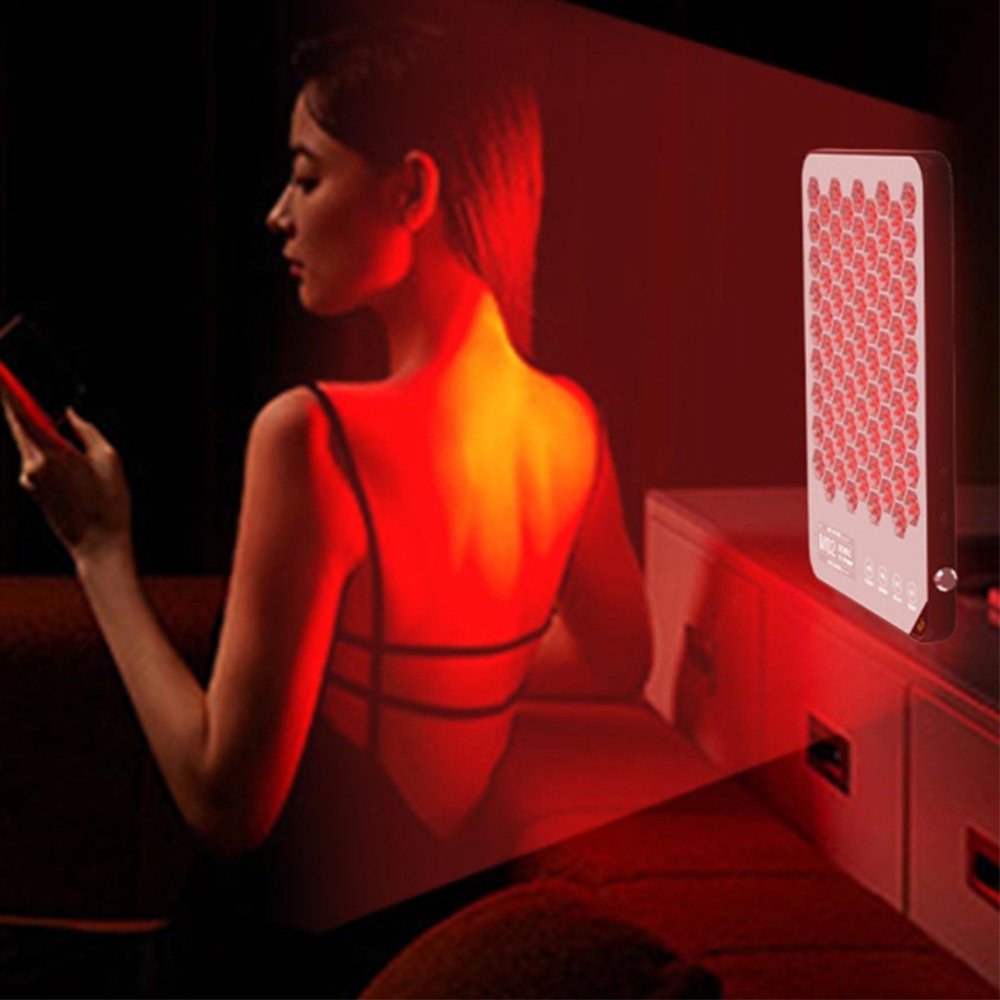
Desktop and Full-Body Panels Are Two Entirely Different Product Categories
When sourcing “LED Light Therapy Panels,” search results typically split into two distinct form factors: 12-inch compact desktop modules and 6-foot-tall, heavy-duty floor stands. Both carry the exact same marketing label: “Red Light Therapy Panel.”
However, the differences go far beyond a simple small-vs-large sizing adjustment.
A desktop panel (12–24 inches, 30–150W) sits on a vanity or workspace, delivering localized 15-minute treatments to the face and neck. A full-body floor panel (4–6 feet, 300–1500W) is a freestanding architectural fixture meant for full-body immersion. While the price variance between these categories can be 5 to 10 times higher for full-body systems, that premium does not just pay for “more LED chips”—it pays for solving complex optical and thermal engineering challenges.
Choosing the right configuration for your brand’s product line requires looking beyond the first line of a spec sheet. Here is the engineering analysis to guide your procurement strategy.
Step 1: Mapping Target Treatment Areas to Spatial Coverage
Before auditing wattage or diode configurations, product managers must first define the target treatment area per session. Total skin surface coverage dictates the optical architecture of the device.
Spatial Treatment Matrix
| Target Treatment Scope | Approximate Coverage Area | Recommended Hardware Form Factor |
| Face and Neck Focus | ~400–600 $\text{cm}^2$ | Compact Desktop Panel (or Flexible Mask) |
| Face, Neck, Shoulders, and Upper Chest | ~600–1,200 $\text{cm}^2$ | Mid-to-Large Desktop Panel (18–24 inches) |
| Half-Body Immersion (Face down to Waist) | ~2,000–3,500 $\text{cm}^2$ | Mid-Size Floor Panel |
| Full-Body Immersion (Head to Toe) | ~4,000–7,000 $\text{cm}^2$ | Full-Body Vertical Panel Matrix |
A standard desktop panel yields a functional treatment field of approximately 300–800 $\text{cm}^2$ (depending on array size and proximity), aligning with localized facial aesthetics. Conversely, full-body panels project an active treatment zone spanning 3,000 to 8,000 $\text{cm}^2$.
If 80% of your target demographic’s use case centers on anti-aging facial aesthetics, a desktop panel line offers the highest return on investment. If your brand targets sports medicine, full-body recovery, or large-surface inflammation management, full-body vertical panels are required.
Total Power Outlets Measure Consumption, Not Dose: The Wattage Illusion
The most prominent marketing figure on a panel’s spec sheet is typically its total power rating: a desktop unit may claim 60W, while a commercial floor stand boasts 500W. While 500W looks eight times more powerful, this gross power draw figure can be highly misleading.
Consider this raw optical calculation:
-
A Standard Desktop Panel: Consumes 60W of electrical wall power. At an industry-standard 30% electro-optical conversion efficiency, it yields roughly 18W of true radiant flux over a compact 500 $\text{cm}^2$ treatment field. Target Irradiance $\approx$ 36 $\text{mW/cm}^2$.
-
A Commercial Full-Body Panel: Consumes 500W of electrical wall power. At a 30% efficiency rate, it delivers 150W of true radiant flux distributed over a wide 5,000 $\text{cm}^2$ treatment field. Target Irradiance $\approx$ 30 $\text{mW/cm}^2$.
Despite the full-body system drawing over eight times the electrical power, the true biological dose delivered per square centimeter of skin is virtually identical—or even lower.
Total electrical wattage simply reflects how much power the device draws from the wall. The metric that dictates true clinical efficacy is irradiance ($\text{mW/cm}^2$)—the concentration of optical energy hitting each square centimeter of target tissue.
When evaluating supplier panels, move past raw aggregate wattage and audit these three foundational metrics:
-
True Target Irradiance ($\text{mW/cm}^2$): The verified power density delivered to the surface.
-
Specified Distance: The exact distance at which that irradiance is maintained (e.g., 6 inches vs. 12 inches).
-
Spatial Uniformity Documentation: The variance profile across the stated treatment area.
If a supplier promotes a “500W panel” but cannot provide verified irradiance mapping at a specific distance, that wattage figure is functionally meaningless for product evaluation.
The Proximity Problem: Why Extended Distances Complicate Optical Design
While an LED mask operates 1–5cm from the skin—where tight diode clustering makes optical uniformity relatively easy to manage—freestanding panels operate under completely different physics.
As distance increases, maintaining uniform energy delivery becomes a significant engineering challenge due to three variables:
[Desktop Panel: Short Range (15-30cm)]  --> High Beam Overlap --> Fewer Cold Spots
[Full-Body Panel: Long Range (15-50cm)] --> Wide Beam Spread --> Higher Risk of Cold Spots & Drop-Off
-
Beam Dispersion Over Distance: Desktop panels operate 15–30cm from the face; floor stands operate 15–50cm from the body. Increasing this distance broadens each diode’s emission cone, which can cause the overlapping energy zones between adjacent LEDs to separate, increasing the risk of “cold spots” (low-energy gaps) across the treatment field.
-
Vertical Path-Length Variances: A full-body panel can span up to 1.5 meters vertically. A diode at the absolute top of the chassis might be 150cm away from a user’s lower extremities, while a mid-tier diode sits just 50cm away. This natural path-length variance means different parts of the body receive uneven dosing due to basic geometric drop-off.
-
Thermal vs. Optical Spatial Competition: Managing a high-output 500W panel requires large internal heat sinks, structural framing, and cooling fans. This hardware takes up valuable real estate inside the chassis, limiting how closely diodes can be positioned and creating a design conflict between cooling capacity and optical spacing.
How Quality Engineering Manages Spatial Uniformity
To maintain a uniform energy dose without causing thermal overload, high-quality panels rely on two key optical strategies:
-
Secondary Optical Lenses: Standard LED chips feature a wide 120° native beam angle. High-end panels integrate secondary lenses over each diode to narrow the emission beam to 30° or 60°. This directional focus preserves target irradiance over longer distances and ensures clean beam overlap at the specified treatment range.
-
Zonal Power Compensation: Advanced full-body arrays do not feed identical electrical current to every diode. Instead, control algorithms modulate the drive current, delivering adjusted power to different vertical zones to compensate for geometric drop-off and ensure a balanced dose from head to toe.
When sourcing, look for suppliers who provide comprehensive multi-point matrix scans rather than a single peak center-point reading. High-performance panels should maintain a strict spatial uniformity tolerance, with variance between the highest and lowest irradiance points kept within a 20% to 30% window across the active treatment zone.
Sourcing for the Consumer Routine: High-Frequency vs. High-Commitment Form Factors
Beyond technical specs, product managers must consider the psychology of the end-user. The device’s form factor directly shapes user compliance and product satisfaction.
The Desktop Panel Persona
-
Integration: Blends into a home office desk, vanity table, or bedside setup.
-
User Friction: Extremely low. The user sits down, flips a single switch, and checks emails or reads for 10–15 minutes.
-
Setup Time: Zero.
-
Footprint: Equivalent to a hardcover book.
-
Compliance Success: High. It integrates easily into existing seated routines.
The Full-Body Panel Persona
-
Integration: Requires dedicated wall mounting or a permanent floor-stand corner in a bedroom or home gym.
-
User Friction: Higher. The user must undress to standard undergarments, stand or modify posture in front of the array for 15–20 minutes without hands-free distractions, and re-dress afterward.
-
Setup Time: 2–3 minutes per session.
-
Footprint: Requires a dedicated 60×60cm floor space with a clear 1-to-2-meter projection path.
-
Compliance Success: Dependent on users dedicated to structured health or athletic recovery routines.
Sourcing Strategy Guidance
If your brand is entering the light therapy market, desktop panels offer a lower barrier to entry for developing consumer usage habits. Full-body panels serve as a high-value upgrade for an established customer base seeking professional-grade, multi-layer care. Sourcing a large floor panel first carries a higher risk of returns due to user friction if the customer is not already committed to a light therapy routine.
The Procurement Checklist
1. Define the Treatment Scope
-
Face & Neck Only: Source a compact desktop panel (or an ergonomic flexible mask).
-
Face, Shoulders, & Upper Torso: Source an extended desktop panel (18–24 inches / 45–60cm height).
-
Full-Body Systemic Care: Source modular full-body vertical panel arrays with stable floor mounting.
2. Verify Spatial Constraints
-
Desktop: Ensure the casing design features a stable, adjustable integrated kickstand suitable for standard flat surfaces.
-
Full-Body: Ensure the product includes secure wall-mounting hardware, door-hanging brackets, or an over-engineered mobile wheeled stand.
3. Audit Irradiance and True Energy Density
-
Insist on verified irradiance values ($\text{mW/cm}^2$) backed by spectroradiometer reports.
-
Confirm the precise target measurement distance (e.g., 6 inches / 15cm).
-
Target standard therapeutic windows: 20–80 $\text{mW/cm}^2$ for Red and 20–60 $\text{mW/cm}^2$ for NIR at standard operational distances.
4. Optimize the Spectral Mix
-
Aesthetics Focus: A dual-band combination of 630nm and 660nm is highly efficient.
-
Systemic/Athletic Focus: Near-Infrared (NIR) 850nm is essential. A full-body panel without an NIR channel fails to utilize the deep-tissue capabilities of a large-format device.
RainbowDO Panel Engineering: Two Distinct Optical Implementations
RainbowDO provides specialized OEM/ODM manufacturing solutions for both desktop and full-body LED panels. Rather than simply scaling a single design framework up or down, we engineer them as two completely separate optical systems.
[Desktop Design: Close-Range Matrix] --> Passive Heat Dissipation --> Silent, Proximity-Optimized Dose
[Full-Body Design: Long-Range Matrix] --> Active Zonal Compensation & Secondary Lenses --> Homogeneous Full-Body Immersion
Desktop Panels: Proximity and Comfort Optimization
Designed to provide uniform facial and upper-chest coverage within a compact 12-to-24-inch frame:
-
High-Density Array Packing: Diode spacing is optimized to ensure complete beam integration at a close 15–30cm working range.
-
Fanless Passive Cooling: Utilizes oversized, high-thermal-conductivity aluminum PCBs for heat dissipation. This allows 100W–150W configurations to operate with zero fan noise or vibration, making for a more pleasant desktop experience.
-
Targeted Tri-Band Spectrum (630nm + 660nm + 850nm): Combines dual-wavelength visible red light for skin rejuvenation with targeted NIR to support neck and shoulder comfort at close range.
Full-Body Panels: Long-Range Uniformity and Thermal Management
Engineered to resolve the natural energy drop-off that occurs over a 1.5-meter vertical span:
-
Zonal Power Compensation Algorithms: Dynamically alters internal drive currents based on vertical positioning zones, correcting for natural path-length attenuation.
-
Precision Secondary Lens Arrays: Features custom 30° to 60° secondary optics that focus energy beams, maintaining target irradiance across longer working distances while ensuring consistent beam overlap.
-
Active Cooling Architecture: Combines high-surface-area internal heat sinks with low-RPM, quiet cooling fans to maintain LED junction temperatures below 85°C, extending diode lifespan and performance stability.
-
Deep Multi-Waveband Configurations: Supports expandable spectral matrices, including 630nm + 660nm + 810nm + 850nm (with options for 940nm NIR-II customization).
Verified Quality Management Protocols
The RainbowDO manufacturing infrastructure operates under an audited ISO 13485 medical quality management system and carries active FDA 510(k) registrations. Our spectral distribution, target irradiance values, and electrical safety profiles are verified through strict batch testing. This ensures that unit 1,000 matches the exact performance standards of unit 1.
Whether your brand requires compact desktop panels, modular full-body arrays, or custom spectral configurations, we can help develop your next product line:
📧 Email: layla@rainbowdo.com | 💬 WhatsApp: +86 135 9032 9742
Sourcing & Engineering FAQ
Q1: Can a consumer use a desktop light panel to target larger body areas?
-
Factory Analysis: Yes, but it is less efficient. A user can position a desktop panel near their knee or lower back, but its restricted coverage area requires treating one small section at a time. Repositioning the device multiple times per session adds user friction, which often reduces long-term product usage. For systemic or large-muscle recovery, a dedicated large-format panel line is the better choice.
Q2: Is a full-body panel inherently more powerful than a desktop unit?
-
Factory Analysis: It is more powerful in terms of total radiant flux (total coverage area), but not necessarily in terms of localized irradiance ($\text{mW/cm}^2$). A well-designed 100W desktop panel can deliver equal or higher power density to a 500 $\text{cm}^2$ area than a 1000W commercial panel delivers to a 5,000 $\text{cm}^2$ area. Sourcing decisions should be based on target coverage rather than raw wattage figures.
Q3: How should a brand choose between developing an LED panel line versus an LED mask line?
-
Factory Analysis: This depends on your target user experience:
-
LED Masks: Offer direct-to-skin contact, which maximizes irradiance efficiency. They provide excellent uniformity and allow the user to move around during treatment, but are limited strictly to facial applications.
-
LED Panels: Offer a hands-free, non-contact experience that some users find more comfortable. They can also be repurposed for multiple body areas, though they require a fixed user position and experience natural power drop-off across the open air space.
-
Q4: Do full-body panels require a significant amount of floor space in a retail or home environment?
-
Factory Analysis: The physical footprint of the panel chassis itself is relatively slim, typically requiring a 40–60cm base diameter. However, the true operational footprint must include the 1-to-1.5-meter clear space in front of the device where the user stands. If the end-user has a permanent location where the panel can remain set up, daily usage rates increase significantly.
Q5: What elements can be customized through RainbowDO’s OEM/ODM services?
-
Factory Analysis: We offer full-service customization across the entire manufacturing pipeline:
-
Chassis Architecture: Custom panel heights (12-inch desktop models up to 72-inch commercial floor matrices) and custom structural frames.
-
Spectral Tuning: Custom wavelength blends selecting from 630nm, 660nm, 810nm, 850nm, and 940nm channels.
-
Optical Matrix Engineering: Custom diode spacing and secondary lens configurations (30°, 60°, or 90°) tailored to your target irradiance and uniformity specifications.
-
Control Systems: Integrated digital control pods, smart timers, multi-channel dimming capabilities, and wireless app integration.
-
Brand Identity: Custom enclosure colors, custom silk-screen branding, and bespoke product packaging.
-
This technical document was prepared by the RainbowDO Engineering Team, utilizing established principles of photobiomodulation (PBM) and practical manufacturing experience in energy-validated aesthetic devices. This document does not constitute formal medical advice. Regulatory classifications and health claims must align with the target market’s specific medical device frameworks.