
How to Use 7 Color LED Mask for Radiant, Healthy Skin
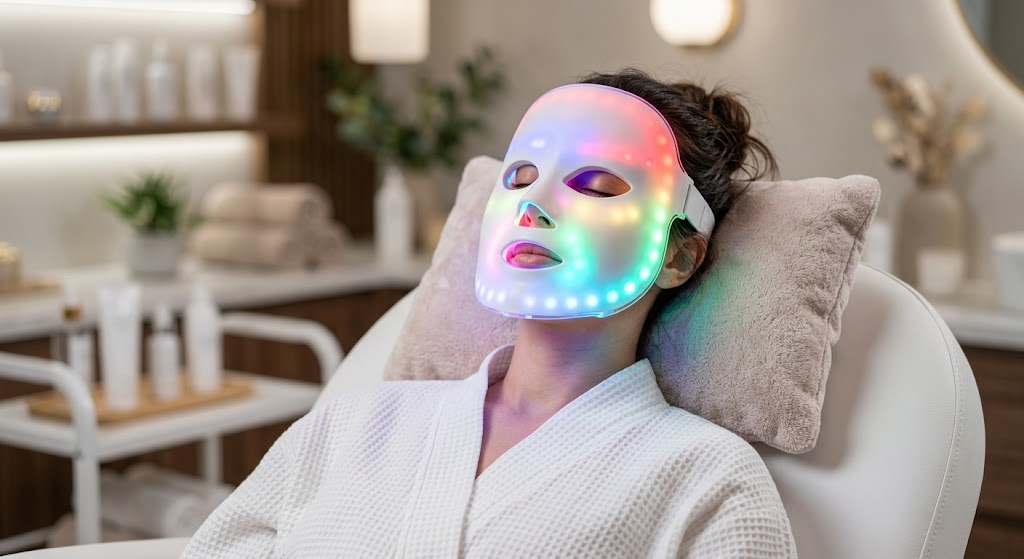
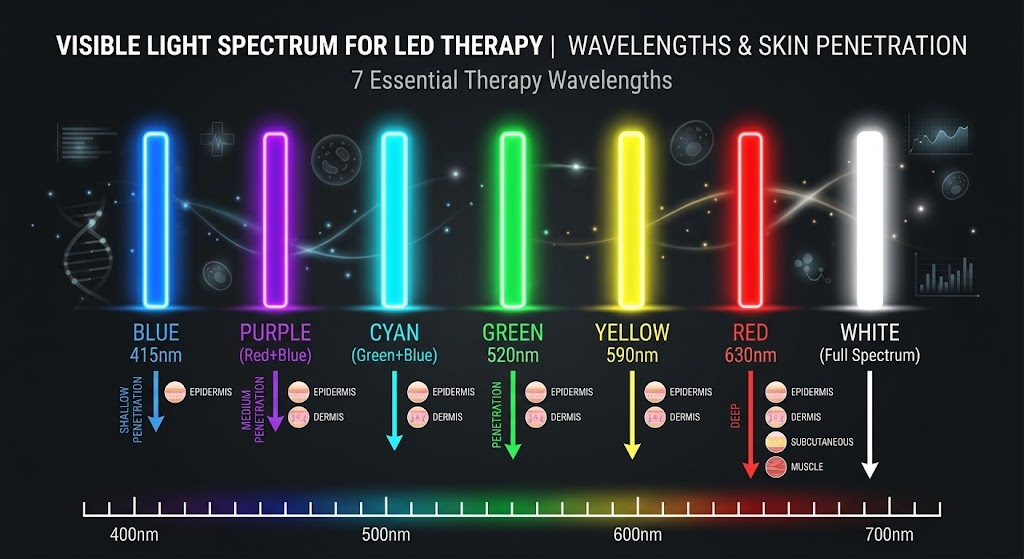
A “7 color” LED mask typically contains four real therapeutic wavelengths — red (~630 nm, collagen), blue (~415 nm, acne bacteria), green (~520 nm, pigmentation), and yellow (~590 nm, erythema and dullness)[2][3] — plus combination modes (purple = red + blue, cyan = green + blue, white = full spectrum). Use it on clean, dry skin for 15–20 minutes, 3–5 times per week, and check the exact wavelength spec before you buy.
Table of Contents
- 1. The 7 Colors, Decoded: Real Wavelengths vs. Combinations
- 2. How to Use a 7 Color LED Mask: Step-by-Step
- 3. Benefits, Matched to Wavelength
- 4. Pro Tips for Better Results
- 5. Before You Buy: The Spec Sheet Test
- 6. Partner With Rainbow Technology for Custom LED Devices
- 7. References & External Links
1. The 7 Colors, Decoded: Real Wavelengths vs. Combinations
Here is the honest engineering view: among the seven colors on a typical multi-color mask, only four are distinct therapeutic wavelengths with a clinical evidence base. The other three are combination modes — they turn on two or more LED colors at once. Knowing the difference is the single most useful thing when choosing modes:
| Mode | Type | What It Does | Evidence |
|---|---|---|---|
| Red (~620–650 nm) | True wavelength | Collagen stimulation, fine lines, firmness, surface healing | Strong — multiple RCTs[2] |
| Blue (~415 nm) | True wavelength | Kills acne-causing C. acnes via endogenous porphyrins; calms inflamed skin | Strong — RCTs + meta-analysis[3] |
| Green (~520 nm) | True wavelength | Pigmentation and tone-related signaling (mechanism still debated) | Emerging — see our green light guide[4] |
| Yellow (~590 nm) | True wavelength | Erythema reduction, dullness, photoaging (clinical experience in 900+ patients) | Moderate[5] |
| Purple | Combination (red + blue) | Combines collagen + acne-bacteria modes in one session | Inferred from components |
| Cyan | Combination (green + blue) | Tone + calming combination mode | Inferred from components |
| White | Combination (full spectrum) | All wavelengths on; general maintenance mode | Inferred from components |
Why this matters: if a mask says “blue 470 nm” for acne, that is outside the optimal 400–420 nm range used in acne trials — it may still be pleasant to look at, but it is not the wavelength the evidence supports[3]. Always check the exact nanometers, not the color name.
2. How to Use a 7 Color LED Mask: Step-by-Step
- Cleanse and dry your face. Light penetrates best through clean, dry skin — and product residue can scatter or block photons. See what to put on your face before LED therapy for the details.
- Power on. Press and hold the power button for 1.5–3 seconds (model-dependent).
- Select your mode by skin concern (see the table above): red for aging, blue for acne, green/yellow for tone, purple/white for combined maintenance.
- Wear for 15–20 minutes. The clinical protocols behind LED therapy typically run 10–20 minutes per session; frequency matters more than marathon sessions[2]. Aim for 3–5 sessions per week, and read how often to use a red light mask for the frequency science.
- Power off and store. Hold the button to turn off, wipe the interior gently with a dry cloth, and store in a cool, dry place. Never use the mask while charging.
Results are cumulative: most clinical protocols show measurable changes over 8–12 weeks of consistent use, not after one session[2].
3. Benefits, Matched to Wavelength
| Claimed Benefit | Wavelength | Evidence Note |
|---|---|---|
| Fine lines and wrinkles | Red (620–650 nm) | Supported by RCTs on facial rhytides and collagen[2] |
| Texture and tone | Red + green | Red for remodeling, green for pigment signaling[4] |
| Inflammation and redness | Yellow (590 nm) + red | Yellow reduces post-procedure erythema; red/NIR reduce inflammation[5][6] |
| Acne bacteria | Blue (415 nm) | Strong RCT + meta-analysis support[3] |
| Elasticity and firmness | Red + NIR | Collagen and elastin support via photobiomodulation[6] |
| Dull, tired skin | Yellow (590 nm) | Clinical experience in photoaging (900+ patients)[5] |
4. Pro Tips for Better Results
- Don’t chase all 7 modes every session. Match the mode to today’s concern. Red for anti-aging days, blue for breakout days, yellow after procedures or for dullness.
- Serums before or after? Water-based serums before the session are fine; avoid thick occlusive creams that scatter light. For a deeper dive, our guide on pre-LED skincare covers the science.
- Consistency beats intensity. 15 minutes × 4 days/week outperforms 60 minutes once a week in clinical protocols[2].
- Protect your eyes. Keep eyes closed under the mask; most masks include eye shields — use them.
- Follow the manual. Charging safety, session limits, and cleaning instructions exist for a reason — device longevity depends on them.
5. Before You Buy: The Spec Sheet Test
Multi-wavelength masks are the most spec-inflated category in LED devices. Before paying for “7 colors,” ask three questions:
- Does the spec sheet list exact nm per color? “Red, blue, green, yellow” with no numbers is a red flag. You want 620–650 nm red, 400–420 nm blue, 515–525 nm green, ~590 nm yellow.
- Is irradiance published? Dose = irradiance × time. Without mW/cm² numbers you cannot compare devices — see our LED device cost and spec comparison for what separates tiers.
- Who makes it, and under what quality system? CE/FDA registration and an ISO 13485 manufacturer are the baseline for a device that will sit on your face 4× a week[7].
For mask vs. panel coverage trade-offs, see mask vs. panel; for the underlying science of wavelengths, the science of red light wavelengths.
6. Partner With Rainbow Technology for Custom LED Devices
A true multi-wavelength mask is an electronics problem before it is a marketing story: independent driver channels per color, wavelength tolerance control (typically ±5–10 nm), per-band irradiance calibration, and photobiological safety. That is what Rainbow Technology’s Shenzhen R&D team does daily. As an ISO 13485, CE, and FDA-compliant LED device manufacturer, we support:
- Custom multi-wavelength mask and panel designs with specified nm and verified per-band irradiance.
- ODM/OEM production from prototyping to mass production, including private label.
- Full regulatory documentation (ISO 13485, CE, FDA 510(k) support) for your market entry.
Launching a light therapy device brand? Visit our OEM/ODM Manufacturing Page or request your custom quote today.

